How Much Protein Do Indian Kids Actually Need? A Parent’s Guide to High-Protein Vegetarian Foods

Key Takeaways
As kids grow, their protein needs change. Toddlers aged 1–3 need about 12.5 grams a day, which bumps up to 16 grams for 4–6 year olds, and 23 grams for ages 7–9. By the time they hit 10–12 years old, they need 32–33 grams daily, with requirements climbing even higher in their teens.
- If a child's diet relies heavily on grains and lacks protein, the ICMR-NIN recommends targeting about 1 gram of protein per kilogram of their body weight each day. You can easily boost their intake with vegetarian staples like paneer, curd, milk, soya, peanuts, sprouts, chana, rajma, and dal-rice.
Most Indian parents guess protein needs because Indian charts are not always easy to find. Some parents think that dal and roti are sufficient. This guide breaks it all down: Indian RDA by age, high-protein vegetarian foods for kids with grams, simple Indian meal combinations, and what to do when your food is lacking.
According to the Indian RDA table (ICMR-NIN, 2020), children need about 12.5 g/day of protein at 1–3 years, 16 g/day at 4–6 years, 23 g/day at 7–9 years, 32–33 g/day at 10–12 years, and higher during the teenage years. For diets that are protein-deficient and heavy on cereal, the ICMR- NIN suggests using the higher end, about 1 g/kg body weight/day. Good vegetarian sources are dal-rice, paneer, curd, milk, soya, chana, rajma, peanuts, and sprouts.
How Much Protein Do Kids Need by Age?
In general, protein is needed to support children’s growth, repair muscles, and strengthen the immune system. While protein is essential, the amount your child needs depends on several factors. It includes age, body weight, activity level, appetite, and overall health.
For Indian children, it is better to use the Indian RDA table rather than a generic international protein requirement table. The table below is based on the ICMR-NIN 2020 RDA values published in the FSSAI RDA direction.
| Age Group | Approx. Protein/Day | Practical Note |
| 1–3 years | 12.5 g/day | Milk, curd, soft dal, mashed paneer |
| 4–6 years | 16 g/day | Add besan chilla, dal, curd, nut paste |
| 7–9 years | 23 g/day | Larger dal portions, paneer, milk twice a day |
| Boys 10–12 years | 32 g/day | Add chana, rajma, soya, paneer, sprouts |
| Girls 10–12 years | 33 g/day | Add protein to meals and snacks |
| Boys 13–15 years | 45 g/day | Higher needs during puberty and activity |
| Girls 13–15 years | 43 g/day | Focus on protein, iron, calcium, and vitamin D |
| Boys 16–18 years | 55 g/day | Needs rise with body size and sport |
| Girls 16–18 years | 46 g/day | Protein at every meal helps close the gap |
These are healthy-child baselines. Life after an illness can be very hard on a kid’s body. Growth spurts occur rapidly. Kids who play sports and those who eat small portions may both require more attention. ICMR-NIN gives a little more insight here. Children with a diet mainly consisting of cereal may require more protein (approximately 1 g/kg/day).
Top Vegetarian Protein Sources for Indian Kids
Most Indian homes have an abundance of vegetarian protein food, so access isn’t the problem. In India, regularity, portion, and food pairings are more of an issue.
Growing kids really have the best vegetarian protein options in India.
Dal and Legumes
Dal is the most common and easiest way to get a daily protein source. Moong, masoor, toor, chana dal, rajma, chole, lobia, and whole pulses are all great options.
A cup of cooked lentils has about 17.9 g of protein. While a cup of cooked chickpeas has about 14.5 g of protein and a cup of cooked kidney beans has about 15.3 g of protein. These numbers change based on the consistency of the dal.
Dal pairs very well with rice. Children can enjoy Dal in many forms, like dal-rice, khichdi, sambhar, chilla, paratha stuffing, or chaat. Dal pairs well with rice, roti, dosa, or idli.
Paneer and Dairy
Paneer is one protein-rich food for kids who are very fussy eaters. It is used in many Indian dishes. Paneer can be used in paratha, bhurji, pulao, sandwiches, rolls, and sabzi.
When it comes to good sources of protein, milk and yoghurt are options as well. A regular 8 oz. cup of whole milk contains approximately 7.0 to 8.0 g of protein. On the other hand, a whole 8 oz. cup of whole milk yoghurt contains 8.5 g of protein.
In addition, all proteins have a complete amino acid profile. Unlike other sources of vegetarian protein, such as chana, rajma, and soya, milk and curd can be easily digested by younger children.
Soya Chunks, Tofu, and Soy Milk
Compared to all other meat analogues, soya is the densest vegetarian protein source. Soy chunks and granules are required by FSSAI to contain at least 50% protein when tested on a dry basis.
Adding soya to older children’s and children who are generally very active and busy packed meals is a good idea. It can be added to a variety of meals, including pulao, noodles, curries, cutlets, rolls, and sandwiches. Tofu is another good option among soya foods, and it is a little softer.
Tofu and soya chunks are gassy and can bloat some children. It’s best to start with small amounts to see how soya and tofu are tolerated.
Eggs for Ovo-Vegetarian Families
Eggs are a complete protein source for vegetarian families who eat eggs. One large egg contains around 6.3 g of protein.
Some meal examples which are egg protein sources include egg curry, egg rice, omelettes, rolls, and sandwiches. From a meal perspective, if a family doesn’t eat eggs, they can eat dairy, soya, dal-rice, chana-roti, sprouts, nuts, and seeds to eat a balanced diet.
Nuts, Seeds, and Nut Butters
Peanuts, almonds, sesame seeds, pumpkin seeds, chia seeds, and even nut butter are protein-packed additions to a meal. Even though they’re not usually consumed in large amounts, they still aid in improving your child’s protein intake.
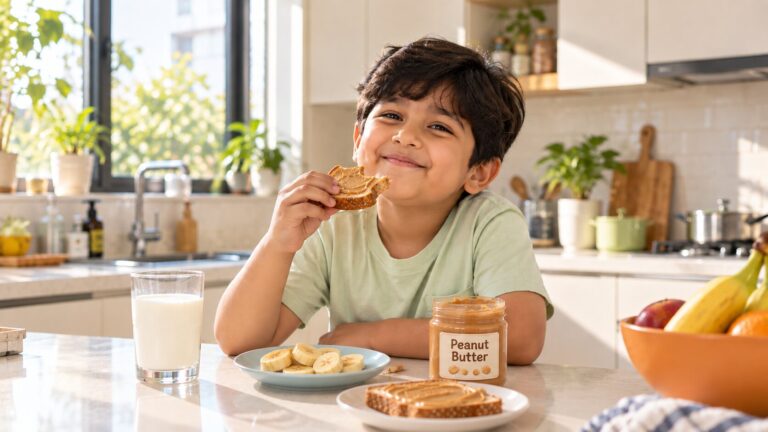
Dry-roasted peanuts contain about 6.9 g of protein in a 28 g serving. They can be made into chutneys, served in poha, made into chikki, eaten as a roasted snack, or made into peanut butter.
For younger kids, whole peanuts can be a choking hazard. Instead, you can offer them smooth nut butter, nut powder, or even nut chutneys. Also, if your child has a nut allergy, these foods will not be safe.
Sprouts, Besan, Sattu, and Whole Grains
These foods can also aid in protein intake: sprouted moong, besan, sattu, oats, millets, and whole grains. These foods may not be as protein-dense as soya or paneer, but can easily fit into your child’s meals.
Some ideas for meals your child may like include besan chilla, moong chilla, sattu paratha, sprout chaat, oats porridge, ragi dosa, millet khichdi, and dalia. IAP has these foods on their list of homemade protein foods. They include milk, dairy, paneer, nuts, legumes, pulses, groundnuts, soya, eggs, and meat. For vegetarian families, these foods aid in protein intake.
Quick Comparison: Protein in Vegetarian Foods
Use this table with a balanced diet chart for kids to plan the full day. A child does not need only one high-protein meal. Protein should be spread across breakfast, lunch, snacks, and dinner.
| Food | Protein in Typical Serving | Complete Protein? | Best For |
| Soya chunks | Minimum 50% protein on dry-matter basis | Yes | High-density protein for older kids |
| Lentils | 17.9 g/cooked cup | Pair with grain | Dal, khichdi, soups |
| Chickpeas | 14.5 g/cooked cup | Pair with grain | Chaat, chole, rolls |
| Rajma | 15.3 g/cooked cup | Pair with grain | Rajma-rice, wraps |
| Milk | Around 7–8 g/regular cup | Yes | Breakfast, bedtime |
| Curd/Yogurt | 8.5 g/cup | Yes | Curd rice, raita, bowls |
| Egg | 6.3 g/large egg | Yes | Ovo-vegetarian families |
| Peanuts | 6.9 g/28 g serving | Near complete | Chutney, snacks, toppings |
Protein values vary by brand, cooking method, portion size, and water content. For packaged foods, always check the nutrition label.
Making Vegetarian Protein “Complete”
Many parents worry vegetarian diets do not provide adequate protein. They can easily provide adequate protein with careful planning.
The idea is very easy to understand, combines cereals and pulses produce high-quality proteins. This is why we say dal and rice is better than rice by itself, chana and roti is better than roti by itself, and idli with sambar is better than idli by itself.
Try these easy combinations:
- Dal + rice: A familiar lunch or dinner base.
- Roti + chana: Easy for rolls and lunch boxes.
- Besan chilla + curd: Protein from gram flour and dairy.
- Idli + sambar + peanut chutney: Cereal, pulse, and nut protein in one plate.
- Milk + oats: A simple breakfast for busy mornings.
- Paneer paratha + curd: Useful for children who dislike plain dal.
- Sprout chaat + curd: Good as an evening snack.
You do not need to make every meal perfect. Aim for one protein source in every main meal and one protein-rich snack in the day.
When Food Falls Short: Protein Powder for Kids
Food comes first. Children shouldn’t be given adult-type protein powders just because they are thin/or active/or fussy. However, there are kids who struggle to achieve the recommended daily protein intake through food.
When Supplementing Makes Sense
If a child eats a small amount of food, is a very picky eater, avoids a lot of food groups, follows a restrictive diet, is recovering from an illness, or has a measured protein gap and that gap is within the recommended daily protein intake for age, then a protein supplement may be used.
What the Indian Academy of Paediatrics (IAP) says is very important. No protein powder can surpass the genetic limit for height. It is very important that children obtain protein from food sources. These include dairy, legumes and pulses, groundnuts and soya, and eggs and meat, if applicable.
So, the rule is clear. Use food first. Use a child-specific supplement only to fill a real nutrition gap.
What to Look for in a Kids’ Protein Product
A kids’ protein product should not look like an adult gym supplement. It should be age-appropriate, clearly labelled, easy to use, and transparent about ingredients.
Look for:
- Age-appropriate protein per serving
- Clear FSSAI details
- No unnecessary additives
- No excessive sugar
- A child-specific formulation
- Added nutrients that support overall growth
- Easy serving instructions
An example of this is Gritzo SuperMilk. Gritzo SuperMilk is customised for age, gender and growth stage. It uses a triple-blend protein coming from Snf, Milk Protein Concentrate, and Whey Protein Concentrate. Our protein blend has a PDCAAS score of 1. It is also free from refined sugars, preservatives, maltodextrin, gluten, artificial flavours, and artificial colours.
For parents, this is what you should know: now Protein Ki Zimmedari Gritzo Ki. Our SuperMilk is not a meal replacement, but a support when regular food is not closing the protein gap.
How to Use It Without Overdoing Protein
You should not blindly add extra protein. Check to see what your child’s protein goals are based on age. Additionally, check all sources your child consumes. Including milk, curd, dal, paneer, chickpeas, rajma, soya, eggs (if used), peanuts, and snacks.
One serving should only fill one protein gap. It should not fill a single protein gap, and it should not be a substitute for breakfast, lunch, or dinner. If your child has lactose intolerance, has kidney disease, has food allergies, is sensitive to the digestive system, or has any other medical condition, please consult a paediatrician.


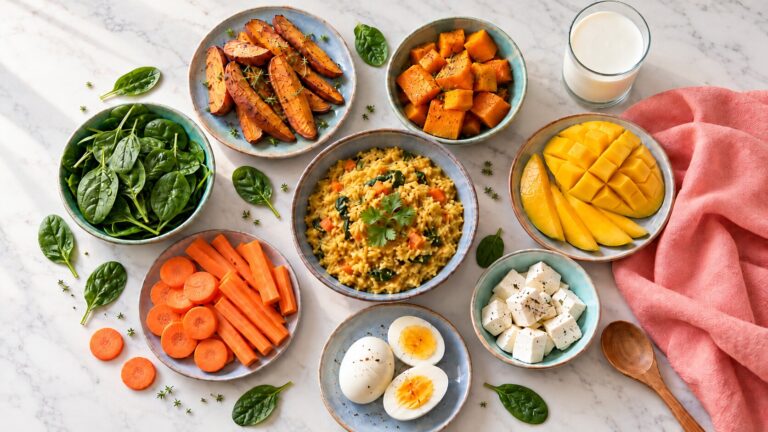



 No Refined Sugar
 No Preservatives
 No Maltodextrin