Healthy Eating Habits for Kids: Behavioural Strategies & Daily Nutrition Guide

Key Takeaways
Healthy eating habits are not built through pressure but through structure, patience, and repeated exposure. Balanced meals, as well as mealtime calm, are needed. Parents should model positive choices. Children should be given nourishing snacks and should be encouraged to listen to their hunger and fullness.
- You can also foster healthy choices among children though small commitments. One of these is changing family mealtime to dinner. You can also improve your child's diet by replacing a snack with a healthier choice. You can add a new fruit or vegetable with no pressure to eat it. All these changes can positively impact your child when combined with healthy choices brought to the family table.
No matter how much you try, sometimes your kid just won’t eat! And it is an issue common to almost all parents. We need to deal with picky eaters, skipped meals, their food tantrums, sweet cravings, and constant snacking. But the real challenge is not always being able to serve them nutritious food. It is to help them feel safe, curious, and confident around good food. This blog talks about how parents need to shape better eating behaviour. And by the end of this guide, you will be able to build simple food routines for them that consist of balanced meals and proper food exposure.
Building healthy eating habits for kids should be about following a structured meal routine. It also requires calm and composed parental role modelling. You need to slowly expose them to different options. However, it is not okay to reward or punish them for their meal choices. It can disturb their natural hunger and fullness cues. Instead, you need to offer them balanced meal plates and limit sugar intake.
The Core Behavioural Pillars of Paediatric Nutrition
Building healthy eating habits in children is tough. But this is the kind of behaviour which needs to be built early. A kid needs dal, chapati, vegetables, rice, curd, fruit, eggs, nuts, or paneer. But how you present these foods to them matters a lot.
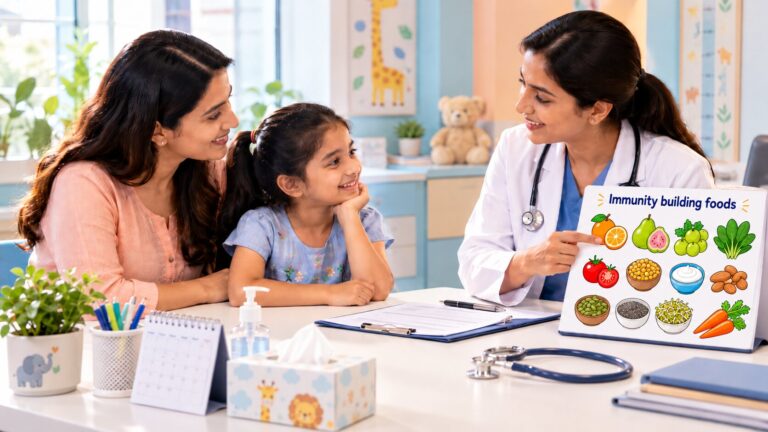
A healthy diet supports their growth, energy, immunity, learning, and long-term well-being. Healthdirect notes that a balanced diet for children should include foods from five different food groups. These are fruits, vegetables, grains, proteins, and dairy. It also says that foods high in sugar, saturated fat, and salt should be limited.
1. Dismantling the Emotional Reward Loop
A few parents also often say, “Finish your plate of vegetables and then you will get chocolate.” Even though this sounds harmless, it isn’t. It can make sweets feel like a prize to them and vegetables a task.
This habit can increase their emotional value of sugary foods. It may also make them resist vegetables more. Parenting experts also warn that using sweets or dessert as a reward for them can make sugar seem more valuable than regular, balanced meals.
So, as a parent, you must know that food should not become a bargaining tool. A better approach is easy to follow, too. Serve them their meals calmly. Let them try small portions first and praise their curiosity, not plate-cleaning.
2. The Satiety Calibration Spectrum
Kids are usually much better than adults at sensing hunger and fullness. A baby turns away their face when they feel full. A toddler may eat more on some days and less on others. This is normal and need not be worrisome.
The “clean your plate” rule can disturb this natural tracking for kids. When they are forced to finish food, they may learn to ignore their fullness. Experts explain that forcing your kids to eat past comfort can weaken self-regulation over time.
Therefore, you should decide what food is served to them and when. You should allow them to decide how much to eat and what is offered.
Key Habits for Structural Behavioural Shifts
Healthy food habits work best when they are recurring. Your kid needs predictability. They also need patience. So, these habits can help you build a better relationship between your kids and food.
1. Implement Consistent, Shared Family Meal Times
Verdict: A strong baseline habit that uses a child’s natural habit of watching adults.
Habit Category: Environmental Structuring
Primary Benefit: Reduces meal skipping and mealtime stress
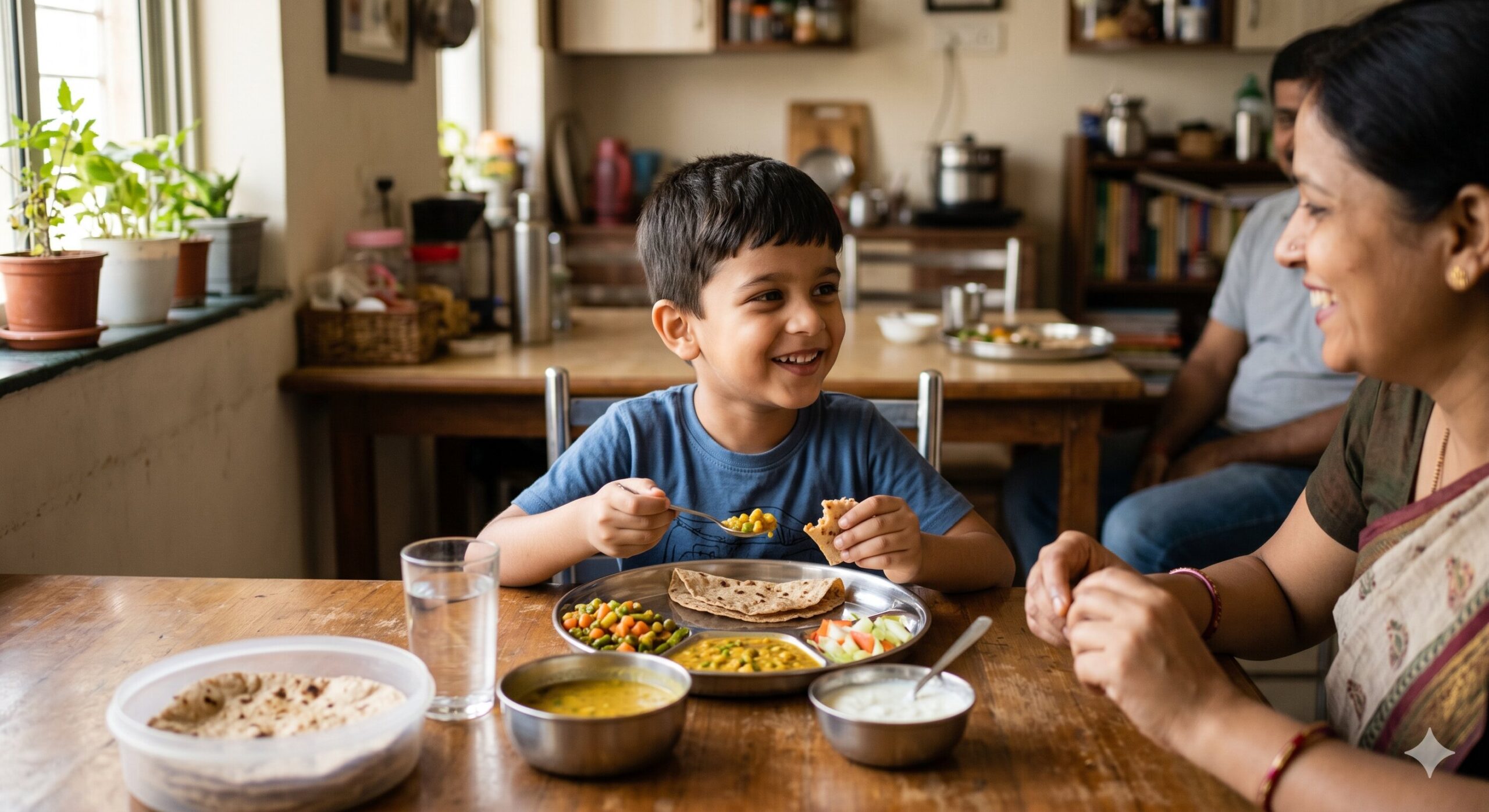
Children learn by example. Attentively eating together encourages children to have a positive attitude toward food. So, let them see you eating food like vegetables, dal, rice, chapati, curd, and nuts and fruits.
Also, family meals help reduce distracted eating. Eating in front of a phone or television diminishes a child’s awareness of their fullness or hunger. Contextual eating.
Aim to have at least one meal of the day without a phone or any form of distraction. This can be breakfast or dinner, or even a snack. Do not focus on perfecting the meal. Create a habitual routine.
Family meals do not have to be extravagant. Enjoyed together, shared, and safe meals can be dal rice and curd with cucumber. Also, roti with paneer bhurji and carrot sticks, or even vegetable poha with milk, is good.
Encourage parents not to make every single bite of food into a discussion, and do not say, “Eat this, it is healthy”, over and over again. Instead, have a variety of conversations or even story sessions. Acceptance of the food is prioritised over the pressure.
Best For: Families dealing with distracted snacking, irregular meals, or daily dinner battles.
2. Deploy Neutral, High-Frequency Food Exposures
Verdict: A practical method to reduce picky eating without pressure.
Habit Category: Desensitization
Primary Benefit: Helps children accept unfamiliar foods
Many children reject newly presented food even though they don’t really hate it. Many children experience food neophobia or fear of new food which is commonly observed.
During food neophobia, many children experience an overwhelming feeling with strong smells. New food textures often irritates them and even they dread bitter vegetables. Most parents give up early, but they do not know that new food acceptances would follow later.
Research suggests that children may require ten to fifteen exposures to a specific food before they are likely to accept it. When you don’t push them to eat, they will start eating. Try offering a small serving of something healthy alongside a favourite food of theirs. Other items such as dal, paneer, curd, or paratha can replace the familiar food served.
Also, if you want them to eat palak, offering it in a different prep method can encourage acceptance. Also, raw carrot sticks and carrot in a sabzi can be accepted in a different format. Beetroot in a sabzi can be rejected, but beetroot cheela may be accepted.
Food exposure can take time, so a calm and neutral tone can help facilitate that time. Avoid statements like, “you never eat anything”. Or stop praising them when they eat.
Best For: Managing picky eaters and increasing vegetable acceptance.
3. Craft Nutrient-Dense, Visual Snack Swaps
Verdict: A useful way to reduce packaged snack dependency.
Habit Category: Ingredient Transformation
Primary Benefit: Lowers refined sugar, salt, and empty calories
Creating nutrient-dense snacks and making a colourful assortment of snacks can improve their acceptance. You should include snacks that are nutrient-dense. Also, include some of the foods that are tough to accept, such as palak.
The solution is not to ban every snack. That can increase cravings. Instead, keep better options visible and easy to grab.
Try these simple swaps:
| Instead of This | Try This |
| Chips | Roasted makhana with ghee |
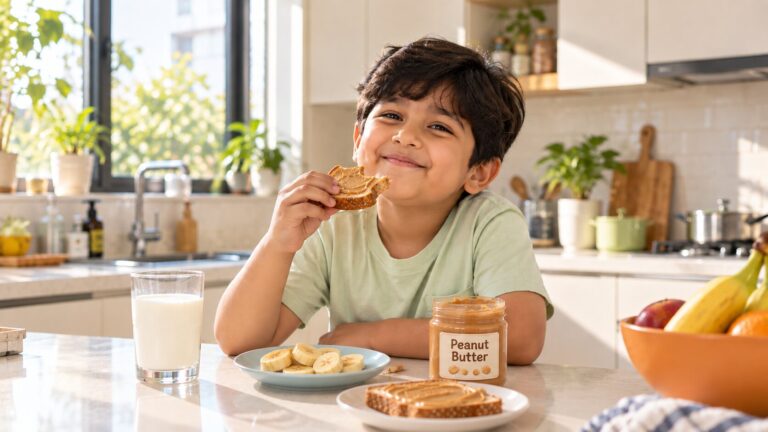
| Cream biscuits | Banana slices with peanut butter |
| Sugary cereal | Homemade poha or upma |
| Packaged juice | Whole fruit or infused water |
| Fried namkeen | Roasted chana or peanuts |
| Chocolate bar | Dates with nuts |
| Instant noodles | Vegetable vermicelli or dal cheela |
WHO recommends limiting free sugars to less than 10% of daily energy intake. It also mentions that their diets should include a variety of minimally processed foods. These should be low in unhealthy fats, free sugars, and sodium.
Visual appeal matters to them, too. They often eat with their eyes first. So, you can cut fruits into small pieces. You may also use colourful bowls. Make snack plates with banana, apple, cucumber, carrot, roasted chana, and paneer cubes to make it look colourful.
When looking to consistently structure proportions across these daily habits, pair your approach with a balanced diet chart. This will guide you to make proper meal distribution.
Best For: Reducing reliance on convenience snacks and improving daily nutrient intake.
4. Involve Children in Grocery and Meal Prep Tasks
Verdict: Builds food autonomy and curiosity.
Habit Category: Active Autonomy Support
Primary Benefit: Improves willingness to try new foods
Children tend to be more willing to try food they have selected or prepared themselves. Shopping and Cooking can turn food activities.
Children can be encouraged to select pumpkins or butternuts. They can be made to wash tomatoes, peel boiled eggs, mash potatoes, cut cucumbers, or even mix the curd.
Children can help prepare food like parathas, and be made to try the food. Children who help wash the spinach are good candidates to try palak paneer.
Keep the food preparation activities age and safety-relevant. Toddlers can help wash fruits. School-aged children can help mix the batter, while older children can help with assembling a meal box.
Parents can help children understand food by giving brief descriptions of the food’s benefits. Keep the explanations short.
Cooking should not turn into a lecture. Make it fun by asking your children to take turns counting and smelling spices. Or ask them to select rainbow veggies to see which are the least and which are the most.
Best For: School-aged children who need more independence around food.
5. Build Predictable Meal and Snack Windows
Verdict: Helps children better understand hunger.
Habit Category: Routine Design
Primary Benefit: Reduces grazing and improves appetite at meals
Instead of eating meals, some children now just snack. Something like biscuits, snacks or juice. All these things combined can leave children feeling full before dinner.
Children need some level of predictability within their daily structure. The most basic of routines may consist of breakfast, lunch, an evening snack, and dinner. Some children may benefit from additional snacks, such as fruit or milk, in between the morning meal. Exact details of a snack structure should consider a child’s age, the timing of their school schedule, and their level of daily activity.
Children should not be allowed to snack throughout the day. Snacking all day keeps children’s appetites muddled. Poor food choices will take precedence over more nutritious meals.
With predictable snack routines in place, children are less likely to ask for food outside of designated snack times.
A sample day can look like this:
- Breakfast: Vegetable poha with curd
- School snack: Fruit and roasted chana
- Lunch: Roti, dal, sabzi, curd
- Evening snack: Paneer cubes or makhana
- Dinner: Rice, fish curry or dal, vegetables
This routine can be adjusted for vegetarian, non-vegetarian, regional, or school-based food preferences.
Best For: Children who skip meals due to constant snacking.
Quick Reference: Paediatric Habit Adjustment Index
Small changes work better when parents know what to avoid and what to do instead. Use this table as a simple guide for daily food behaviour.
| Target Childhood Habit | Common Pitfall to Avoid | Actionable Behavioural Strategy | Primary Nutritional Objective |
| Vegetable consumption | Hiding greens completely in purees | Present whole greens neutrally with familiar dips | Supports vitamin, mineral, and folate intake |
| Hydration routines | Giving packaged juice often | Keep water bottles with fruit slices | Reduces sugar load and supports dental health |
| Snack apportionment | Using candies as obedience rewards | Offer roasted nuts, seeds, makhana, or chana | Provides healthy fats, protein, and minerals |
| Meal autonomy | Forcing clean-plate finishing | Let the child choose the first serving size | Preserves hunger and fullness cues |
| Breakfast routine | Skipping breakfast before school | Offer quick meals like poha, eggs, oats, or paratha | Supports energy and morning focus |
| Protein intake | Depending only on milk | Add dal, eggs, paneer, curd, sprouts, fish, or chana | Supports growth and tissue repair |
| Fruit intake | Replacing fruit with juice | Serve whole fruit pieces | Improves fibre and chewing habits |
Age-Wise Milestone and Tracking Adaptations
Eating habits need to be adjusted based on a child’s age. There is a need for more structure for school-age children as compared to preschool-age children.
The Toddler Separation Phase: Ages 2 to 4 Years
Although toddlers’ eating habits change, parents should not be overly concerned. Children’s appetites decline as growth slows.
Do not chase toddlers with food. Offer small serving sizes, as children are more likely to eat a small spoonful of food as compared to a full serving left out and offered with coercion.
Offer small servings. One spoon of vegetables is better than a full bowl rejected with stress.
The Primary School Window: Ages 5 to 11 Years
Children and parents have to balance school schedules, extracurricular activities, and socialisation during this period. School-age children often want foods that have friends’ peer groups’ foods and snacks. And they may specifically ask for commercial and convenience food snack packaging.
Balanced and neat tiffin options can include paneer rolls, dal cheela, vegetable idli, egg sandwiches, parathas with curd, or even fruit and nuts.
The Adolescent Transition Block: Ages 12 to 18 Years
This stage is marked by significant growth and with it, higher demands for protein, iron, calcium, and energy. Breakfast, in particular, is often neglected, and teenage years are marked by a reliance on food from outside or fad diets.
Unrefined, wholesome, and convenient options must be available. Boiled eggs, sprouts, paneer, curd, nuts, fruit, peanut chikki, dal, soy, and rolls are good options.
WHO notes that protein intake may be greater than 15% of daily energy during adolescence, especially for those actively building or maintaining muscle. This makes food quality important during the teenage years.
Common Mistakes Parents Should Avoid
Parents mean well, but some habits are counterproductive and end up creating stress around food.
1. Rewarding with Sweets or Chocolates
Children end up thinking that chocolates are prizes and vegetables are punishment. So, sweets of any kind should be kept neutral and offered on occasion.
2. Force-Feeding
Fear and resistance are common results of force-feeding, and it also creates poor self-regulation. Meal times become emotionally burdensome.
3. Too Many Alternatives
It becomes a habit for children to refuse what is offered in favour of the food of their choice. A single safe food should be offered, but it is unnecessary to have a different food for each meal.
4. Easy Access to Packaged Snacks
Children eat what is in plain sight. Homemade food like fruit, nuts, and curd should be more accessible than chips or sweets.
5. Anticipating Immediate Acceptance
Changing eating habits is a gradual process. Foods that are initially rejected may need to be offered multiple times. Be persistent.
6. Healthy Snacks for Growing Children
Snacks should fill nutrient gaps, not replace meals. Good snacks include those rich in protein, fibre, healthy fats, or micronutrients.
Try these options:
- Roasted makhana with ghee
- Banana with peanut butter
- Boiled egg with fruit
- Paneer cubes with cucumber
- Sprouts chaat
- Vegetable cheela
- Curd with fruit
- Roasted chana
- Peanut chikki
- Idli with sambar
- Sweet potato chaat
- Homemade trail mix with nuts and seeds
Avoid giving them fruit juices too often. Whole fruit always a better option. It provides fibre, which makes them stay full for longer. AAP-based guidance says toddlers aged 1 to 3 years should have no more than 4 ounces of juice per day.
Why Breakfast Should Not Be Ignored
Breakfast helps your kids start their day with energy. A balanced breakfast should include carbohydrates, protein, and healthy fats.
A few good examples include:
- Vegetable upma with curd
- Egg and whole wheat toast
- Paneer paratha with curd
- Oats with banana and nuts
- Idli with sambar
- Dal dosa
- Poha with peanuts
- Milk with fruit and homemade chilla
Studies show that skipping breakfast results in learning difficulties for school-age children. One of the larger studies surveying 28,651 students showed children who did not eat breakfast were almost twice as likely to do poorly on a math test and 1.6 times more likely to do poorly on a reading test.





 No Refined Sugar
 No Preservatives
 No Maltodextrin