Vegetarian Protein Meal Plan for Kids (2026): Age-Wise Daily Charts with ICMR Protein Targets

Key Takeaways
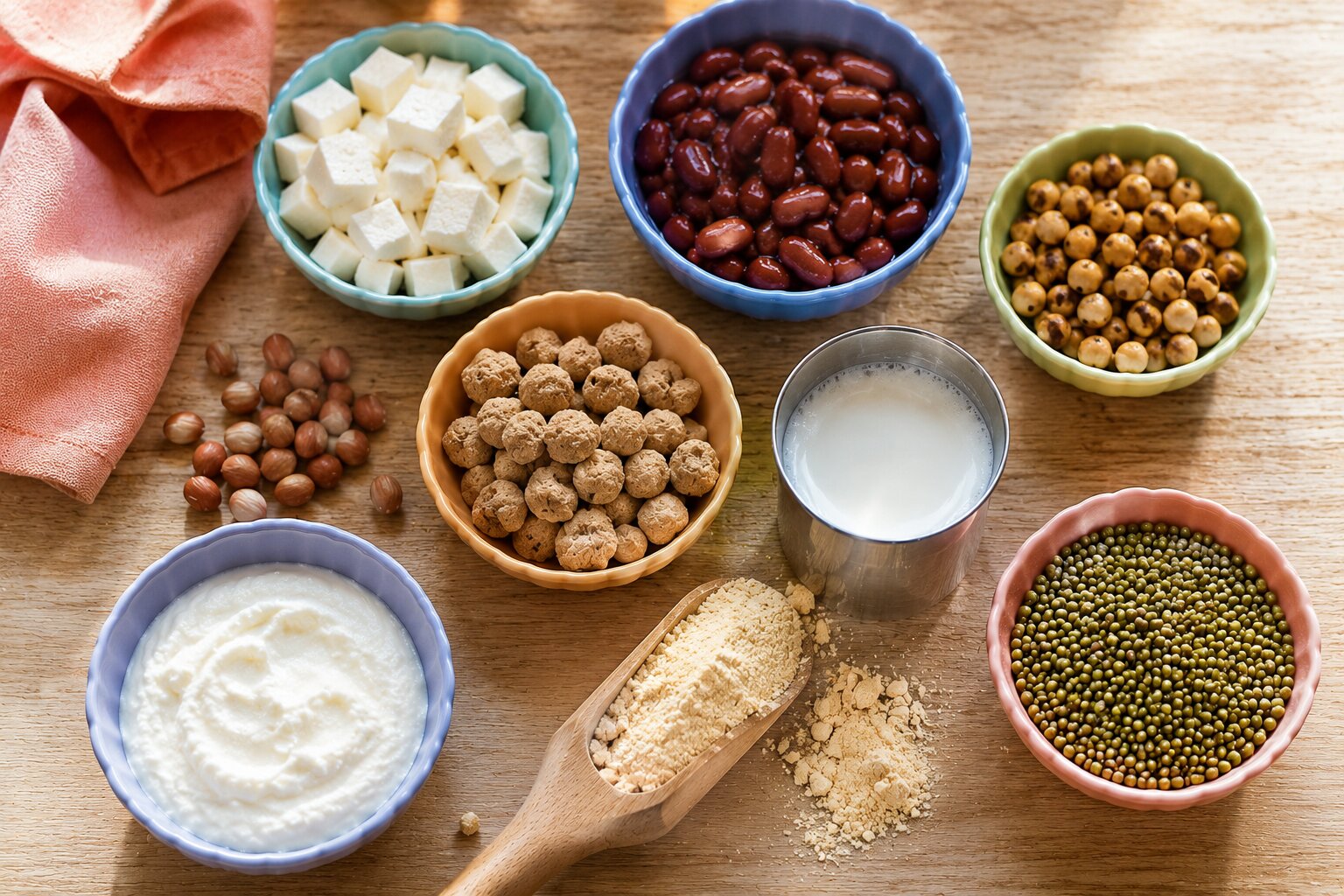
A vegetarian child can meet protein needs with regular Indian foods. The key is planning. Do not depend only on rice, roti, poha, or paratha. Add dal, curd, milk, paneer, chana, rajma, soy, nuts, seeds, and sprouts throughout the day.
- Save the chart for your child’s age band. Use it for one week. Tick protein at each meal. If your child is underweight, very picky, highly active, or falling short despite planning, speak to a paediatrician for a weight-based diet plan.
An Indian vegetarian thali can help meet a child’s protein needs, but the balance of food with proper planning is needed. Many everyday meals are heavy on rice, roti, poha, and paratha. These items can provide energy but may not give enough protein on their own. Here, we have curated a vegetarian protein meal plan for kids. There are age-based daily charts for ages 4-7, 8-12, and 13+. Each chart shows estimated protein intake from breakfast to dinner against ICMR-NIN protein targets.
ICMR-NIN 2020 indicates that the protein RDA for children depends on age and weight. A 6-year-old weighing 20 kg may need about 16-20 grams of protein daily, depending on the quality of the diet. Protein needs increase as children grow older, especially during teenage. For a vegetarian child, protein needs can be met by consuming dairy, dal, beans, chana, soybeans, nuts, seeds, and whole grains. A good and easy rule is to mix cereals and pulses, for example, dal and rice, or idlis and sambar, or rajma and rice, or roti with dal.
How Much Protein Does a Vegetarian Child Need? ICMR RDA by Age
Not all children have the same protein requirements. Protein requirements change with age, weight, the stage of growth or development, and level of activity. The Recommended Dietary Allowance or RDA is the reported daily protein need for the healthy child of a particular age group.
According to ICMR-NIN 2020, protein RDA for children is also age-related. The report also indicates that protein quality improves with a balance of cereals, legumes, and milk. For cereal-based diets with low protein quality, the requirement may approach 1 g/kg body weight/day.
Vegetarian protein can work well when meals are planned properly. Research on plant-protein combinations explains that cereals and pulses can complement each other because they balance amino acid gaps better together than alone. That is why Indian combinations like dal-rice, khichdi, idli-sambar, and roti-dal are practical.
| Age Band | ICMR-NIN Reference Body Weight | Daily Protein Target | Practical Takeaway |
| 4-7 years | 18.3-25.3 kg | 15.9-23.3g/day | Add 3 small protein anchors daily |
| 8-12 years | 25.3-36.4 kg | 23.3-32.8g/day | Add protein at every main meal |
| 13+ years | 49.6-64.4 kg | 43.2-55.4g/day | Use larger portions and protein-rich snacks |
Note: These are planning ranges. A child’s exact need depends on body weight, activity, appetite, health condition, and growth pattern.
The Meal Plans: Age-Wise Vegetarian Protein Charts
Estimated protein values are given below. They are based on the Indian Food Composition Tables 2017 and the common Indian serving sizes. Protein values can vary based on the recipe, cooking method, portion size, and even water content.
4-7 Years: Smaller Portions With 3 Protein Anchors
For kids in this age group, the goal is not to serve large portions. Kids this age eat smaller portions, so the goal is to place small protein sources throughout the day. Chilla, curd, milk, dal, and soft paneer are good sources of protein, and even work well for picky eaters.
| Meal | Example Dish | Key Protein Source | Protein Approx. |
| Breakfast | 1 small moong dal chilla with 2 spoons of curd | Moong dal, curd | 5g |
| Mid-Morning | 150 ml milk | Milk | 4.5g |
| Lunch | Small rajma-rice bowl with 2 spoons of curd | Rajma, curd | 6g |
| Evening Snack | Small roasted chana portion or peanut chaat | Chana or peanuts | 4g |
| Dinner | ½ katori dal, 1 small roti, sabzi | Dal, wheat | 6g |
| Day Total | 25.5g approx. |
This plan is also good for 7-year-olds. If the kid is younger, you can reduce the portions. If the kid is taller or more active, the portions may also need to be adjusted.
For more food ideas, parents can also look at Gritzo’s Protein for Kids guide.
8-12 Years: Protein at Every Main Meal
Kids in this age group have longer school hours and also need a more filling tiffin. So breakfast, lunch, and dinner need to have one protein source each. Snacks should also include a protein source, instead being limited to biscuits and chips.
| Meal | Example Dish | Key Protein Source | Protein Approx. |
| Breakfast | Paneer vegetable sandwich or besan chilla | Paneer or besan | 8g |
| Mid-Morning | 200 ml milk or curd smoothie | Milk or curd | 6g |
| Lunch | Dal-rice with curd and vegetable | Dal, curd | 8g |
| Evening Snack | Peanut chaat or roasted chana | Peanuts or chana | 6g |
| Dinner | 1 roti, 1 katori dal, sabzi | Wheat, dal | 8g |
| Day Total | 36g approx. |
This makes sure that the protein is well distributed throughout the day, and also makes sure that the child does not have a large protein meal at night. For the school tiffin, good protein options are paneer roll, sprouts chaat, dal paratha, and curd with peanuts.
13+ Years: Larger Portions and Smarter Snacks
Getting enough protein is essentially important for teens, and sports nutrition (especially teen athletes). For teen athletes, protein intake should be planned with a paediatrician or dietitian. The IAP adolescent nutrition guideline recommends balanced meals and snacks with foods such as cereals, pulses, dairy, nuts, fruits, and vegetables, along with regular physical activity.
| Meal | Example Dish | Key Protein Source | Protein Approx. |
| Breakfast | 2 moong dal chillas with curd | Dal, curd | 12g |
| Mid-Morning | 200 ml milk with nuts or sattu drink | Milk, nuts or sattu | 8g |
| Lunch | Rajma-rice, curd, salad | Rajma, curd | 13g |
| Evening Snack | Paneer cubes, peanut chaat, or sprouts | Paneer, peanuts, sprouts | 10g |
| Dinner | Dal-roti with soya or quinoa-dal khichdi | Dal, wheat, soy or quinoa | 14g |
| Day Total | 57g approx. |
The portion sizes in this chart are the maximum for teens. If your teen is petite or not very active, feel free to make the portion sizes smaller. For your teen athletes, a pediatric dietitian can help develop a plan.
You can also check Gritzo’s balanced food pyramid for kids to ensure that all the food groups appear.
Best Vegetarian Protein Sources for Kids
For a vegetarian option, the food should be protein-packed, easy for kids to eat, and fit into Indian meals. Here are some options.
| Food | Protein per Typical Serving | Why It Suits Kids |
| Milk | 6g per 200 ml | Easy daily protein source |
| Curd | 3-5g per small bowl | Good with rice, paratha, or fruit |
| Paneer | 7-9g per 40-50g | Soft texture and tiffin-friendly |
| Dal | 6-8g per katori | Easy to pair with rice or roti |
| Rajma or chole | 7-9g per cooked katori | Filling lunch option |
| Roasted chana | 5-6g per small handful | Good evening snack |
| Peanuts | 5g per 20g | Useful in chaat, poha, or laddoo |
| Soya chunks | 12-13g per 25g dry | High protein, but portion carefully |
| Besan | 6-7g per chilla portion | Good for chilla, dhokla, cheela |
| Whole wheat roti | 3g per medium roti | Adds protein when paired with dal |
Dairy is a great source of protein. Pulses and legumes are good sources of protein and fibre. Soy is a great protein option when having small servings. Nuts and seeds add protein and healthy fats. Whole grains also contain protein but work best when paired with dal, curd, paneer, or beans.
The cereal-pulse rule is very simple to learn. Rice alone is not a very high-protein meal, but dal-rice is. A roti is not a very strong meal, but roti and dal, chana, paneer, or curd are.
How to Hit the Protein Target in Indian Vegetarian Households
Combine Each Grain Serving With a Pulse
This concept should be universal. Dal should be paired with rice, idlis with sambar, chana with poori, rice with rajma, and roti with dal. This increases the quantity and quality of protein.
Include One Dairy Serving at Each Meal
For vegetarian families, this includes milk, curd, paneer, and buttermilk. Include curd in the midday meal. Include milk in the morning meal. Include paneer in rolls, parathas, and sandwiches.
Highly Nutritious Snacks Should Be Protein-Rich
Snacks should bridge nutritional gaps, unlike cream biscuits and chips. Opt for roasted chana, peanut chaat, curd with fruit, paneer, sprouts, besan chilla, or a combination of nuts and makhana.
Protein Should Be Simple for the Fussy Eater
Do not force-feed your children. Design the meal with soft, fun shapes, small snacks, stuffed parathas, chillas, smoothies, and even fun homemade rolls. Let them pick from two healthy snack options.
Track Progress for One Week
Use the Protein Chart for Children in India and check off each meal when you have provided a protein source. Don’t aim for perfection every day. Aim for a balanced week’s worth of meals.
When Diet Needs a Top-Up
Always prioritise food over supplements, but some children are fussy eaters and have low appetite periods that could mean they miss protein targets. After careful meal planning, parents can consider a measured top-up, after consulting with a paediatrician or dietitian.
Gritzo’s SuperMilk range is designed as a personalised nutrition drink for children, with options tailored to age, gender, and nutrition goals. These drinks can supplement proteins, but should not be used as meal replacements.





 No Refined Sugar
 No Preservatives
 No Maltodextrin