Prebiotics for Kids: Foods, Benefits & How They Differ from Probiotics (2026)

Key Takeaways
The core relationship: Probiotics are the beneficial gut bacteria, and prebiotics are the plant fibres that feed them.
- Natural sources: Whole foods like under-ripe bananas, oats, apples, lentils, and whole wheat are the most effective ways to provide prebiotics.
- General target: A standard daily fibre guideline is the child's age plus 5 to 10 grams (aiming for at least 5 grams of prebiotic fibre).
- Safe implementation: Introduce fibre gradually and pair it with plenty of water to prevent digestive discomfort like gas or bloating.
You’ve probably heard that your child needs “good bacteria” for a healthy gut. But here’s the part that often gets missed: good bacteria need to eat too.
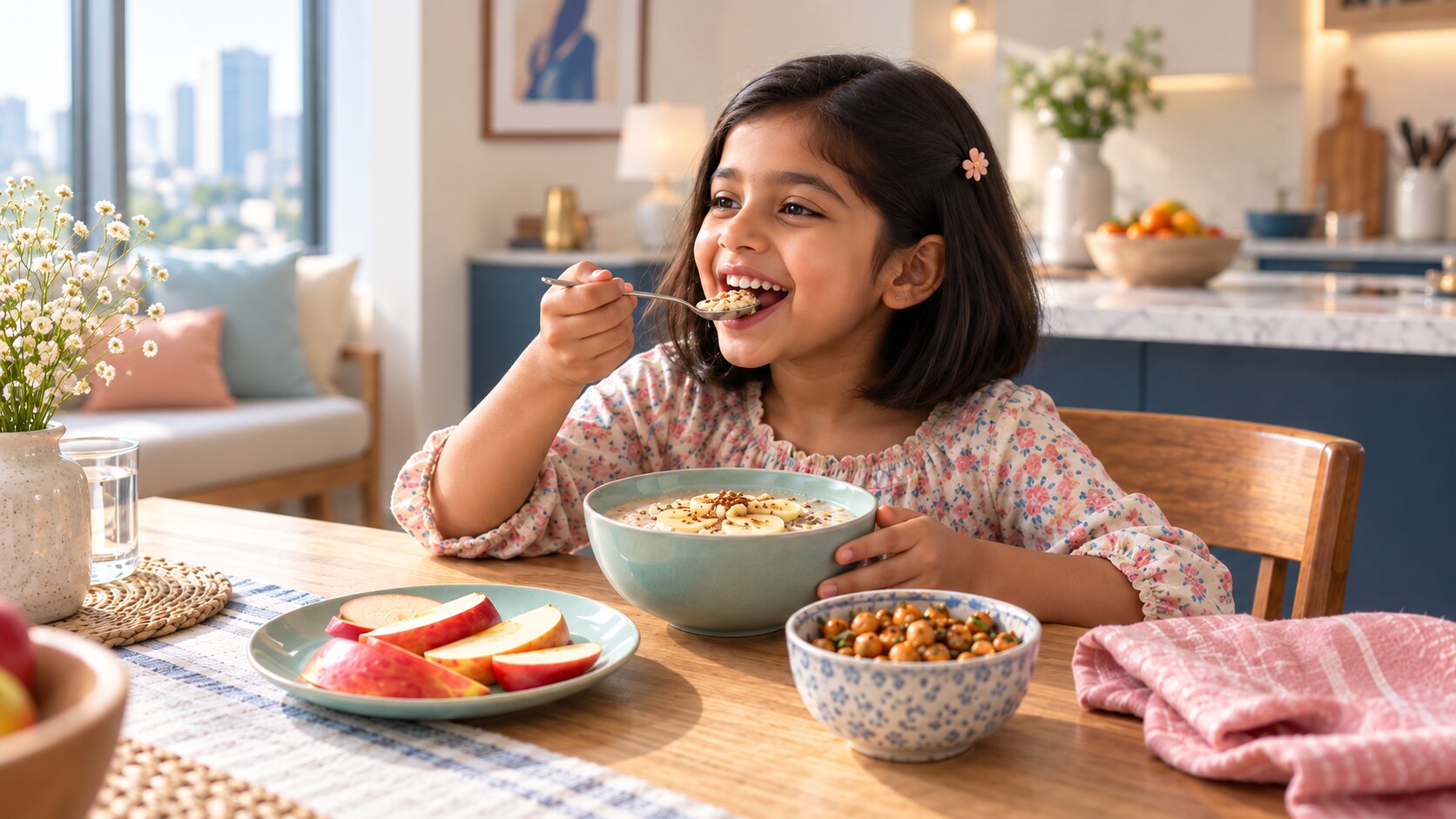
That’s where prebiotics come in. Prebiotics represent plant fibers that serve as food for the beneficial gut bacteria. They are found naturally in common foods like bananas, oats, wholegrains, apples, onions, and beans.
What are Prebiotics for Kids?
Prebiotics are the indigestible fibres found in plants. They include inulin and FOS. These can be found in everyday food items like bananas, oats, grains, apples, and onions. Some benefits of prebiotics could be maintaining gut health for kids, digestive system health, constipation relief, and proper functioning of the immune system. Whole food sources are the best way to obtain prebiotic foods for kids. One recommended dietary fibre intake formula for children is age +5 grams/day of fibre, with at least 5 grams being prebiotic fibre, according to CHOP.
Consult your paediatrician before taking supplements, especially for infants.
Prebiotics vs Probiotics for Kids
To understand the basic difference between prebiotics vs probiotics for children, you need to remember just one key point.
Probiotics are the good bacteria. Prebiotics are their food.
They are different, but can be combined.
What are probiotics?
Live microorganisms that confer a health benefit on consumption in adequate amounts are probiotics. Examples of probiotic strains are some Lactobacillus and Bifidobacterium strains. They can be present in certain fermented products and dietary supplements.
What are prebiotics?
Substances which are selectively utilised by beneficial microorganisms are called prebiotics. Most of them belong to the dietary fibre group. Examples of prebiotics include inulin, FOS and GOS. Such foods as bananas, oats, onions, garlic, beans and whole grain foods contain prebiotic substances.
One key point: All prebiotics are fibre, but not all fibre is prebiotic.
| Prebiotics | Probiotics | |
| What are they? | Food source for good bacteria | Living good bacteria |
| Example | Inulin, FOS, GOS | Some strains of Lactobacillus and Bifidobacterium bacteria |
| Sources | Banana, oats, onions, whole grains, pulses | Some fermented foods and probiotic supplements |
| Main function | Nourish selected gut microbes | Add specific live microorganisms |
Therefore, if probiotics are the “players”, prebiotics are what nourish them and help the players thrive!
Benefits of Prebiotics for Child’s Gut
However, it must be said that prebiotics do not act like a cure-all miracle for your gut and immune system. But scientific studies indicate that some prebiotics can positively impact several issues related to gut health.
Feeds Good Bacteria
Some beneficial bacteria in the gut can consume prebiotic fibre. Examples of those bacteria include Bifidobacterium and Lactobacillus. Their presence can result in gut microbiota health.
Consider the gut microbiota as a community. Prebiotic fibre is what you use to feed the good microorganisms.
Better Digestion and Regularity
Fibre for children can assist in adding bulk to their faeces and help maintain regular bowel movements. Specific prebiotics such as inulin-type fructans have also been considered for their influence on faecal consistency.
For a regular diet, however, the purpose is much easier.
Immune Support
The gut and the immune system are linked to each other. Gut microbes in good health will be able to communicate well with the immune system of the body.
Some studies have shown that there are prebiotics that could help in strengthening natural immunity through changes to the gut microbiome. At the same time, please note that it doesn’t imply that prebiotics are kids immunity foods or foolproof illness preventives.
Top Prebiotic Foods for Indian Kids
The good news is that many foods rich in prebiotics are available in an Indian kitchen. You may not even have to create a separate shopping list. The emphasis must always be on a variety of foods, whole foods, and slowly adding more fibre.
Some simple choices could be:
| Food | Fibre/prebiotic component | Kid-friendly way to serve |
| Slightly Under-Ripe Banana | Resistant starch and other fibres | Sliced with breakfast, smoothie or curd |
| Apple | Pectin and fibre | Sliced with skin, if tolerated |
| Guava | Fibre | Cut into small pieces or served as fruit chaat |
| Oats | Beta-glucan and other fibres | Oats porridge, overnight oats or pancakes |
| Whole wheat | Fibre and fermentable carbohydrates | Roti, paratha or whole-wheat toast |
| Barley | Beta-glucan and fibre | Added to soups or khichdi |
| Dal | Fermentable dietary fibre | Dal, khichdi or dal cheela |
| Chana | Fibre and resistant carbohydrates | Chana chaat or hummus-style dip |
| Rajma | Fibre and resistant starch | Rajma rice or mashed into a filling |
| Onion & garlic | Prebiotic compounds including fructans | Add to everyday curries, dals and vegetables |
| Sweet potato | Fibre and resistant starch | Roasted, mashed or made into chaat |
The exact quantity of prebiotics differs from one food to another. Hence, you don’t have to get obsessive about finding the ‘perfect’ prebiotic food. Consistency and variety matter more than any single “superfood.”
Got a Fussy Eater? Try These Combinations
If your child is resistant to anything remotely healthy, try these combinations instead.
- Blend bananas and oats for a smoothie.
- Use oats in pancake batter.
- Blend vegetables in dal and khichdi.
- Offer chana as a crunchy snack.
- Mix seeds into curd.
- Add dal to khichdi
How Much Fiber, and How to Add It (Age-Wise)
One such guideline used for children at the Children’s Hospital of Philadelphia says that the total fiber requirement of a child is about his/her age + 5 to 10 grams of fiber daily. Therefore, for a 6-year-old child, the recommended daily amount of fiber could be 11 to 16 grams. The Children’s Hospital of Philadelphia also advises that out of this, 5 grams of fiber should be prebiotic fiber.
This is just a guideline and not a specific prescription.
The requirement of fiber in children could vary based on factors like their age and health conditions.
If your child has a low intake of fibre, do not try to suddenly double that amount. Start by adding a small quantity and slowly increasing it once the body gets accustomed to it. This is because a sudden rise could lead to bloating, gas or minor stomach irritation.
Also, don’t forget water. Ensure your child drinks adequate amounts of water with the increase in fibre intake.
Above all, what is most important is consistency over perfection.
Do Kids Need Prebiotic Supplements?
For most healthy kids, food is always first and enough.
Whole foods are not only rich in prebiotic fiber but can also contain other beneficial elements such as vitamins and minerals for a well-rounded diet. According to CHOP, whole foods are recommended as the first choice when it comes to getting prebiotic fiber.
In some cases, a pediatrician is best to recommend prebiotic supplements based on the individual needs and age of a child.
When shopping for a supplement, check if all the ingredients are listed explicitly on the label. This may include inulin, FOS, or GOS. Also, take note of the recommended age range and avoid unnecessary sugars.
For a healthy and tasty supplement, you can check out Gritzo Super Milk, which contains inulin (chicory root fiber). Additionally, you can also check out the Gritzo Guide to Foods and Habits for Kids’ Immunity to support your child’s immune system effectively.
Safety and When to Talk to Your Pediatrician
Prebiotic foods are usually safe for most healthy children when taken as part of a balanced diet. The initial stages of increasing fibre in your child’s diet may result in temporary gas, bloating, or cramps, and that is completely normal. This problem can be solved by starting with small quantities of prebiotics and gradually increasing them.
Consult your paediatrician before starting prebiotic supplementation in case your child:
- Is under 12 months old.
- Suffers from chronic gastrointestinal issues (IBS, IBD)
- Experiences regular abdominal pain, bloating or digestive disorders.
- Is severely ill or immunocompromised.
Prebiotic foods are meant to complement a balanced diet but not substitute medical treatment.
The Bottom Line
You don’t need to overcomplicate your child’s diet.
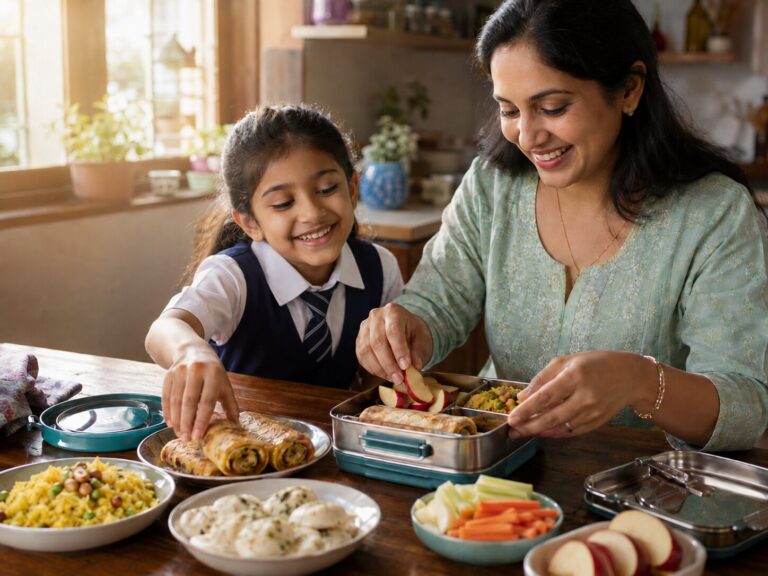
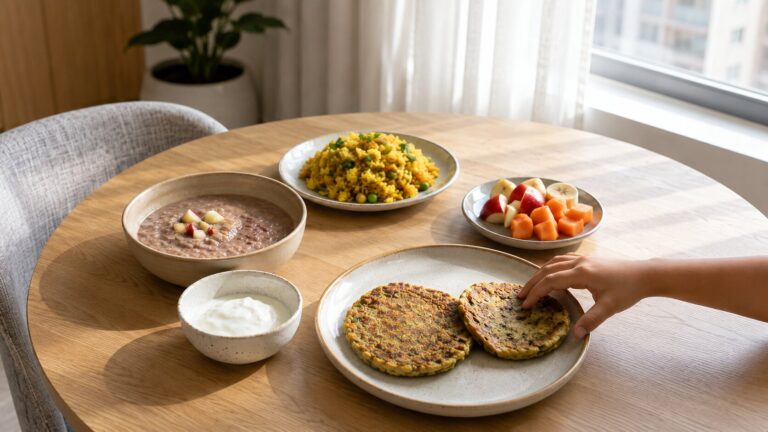
Begin with foods that are easy for your child to eat. For example, include banana in breakfast, dal in lunch, oats in snacks, or wheat chapatti at night. Add new foods gradually and combine high fiber content with sufficient water intake.
The aim is not to look for a superfood for your child’s gut bacteria but to create a diet that will ensure a regular supply of a varied diet for their gut microbes.
And in case you have concerns regarding your child’s fiber intake or digestive system, contact your pediatrician. Also, be cautious when adding prebiotics. Do not force your child to abruptly shift from eating practically no fiber to eating double its amount.





 No Refined Sugar
 No Preservatives
 No Maltodextrin