20 Healthy Tiffin Ideas for Kids: Easy Lunch Box Recipes (2026)

Key Takeaways
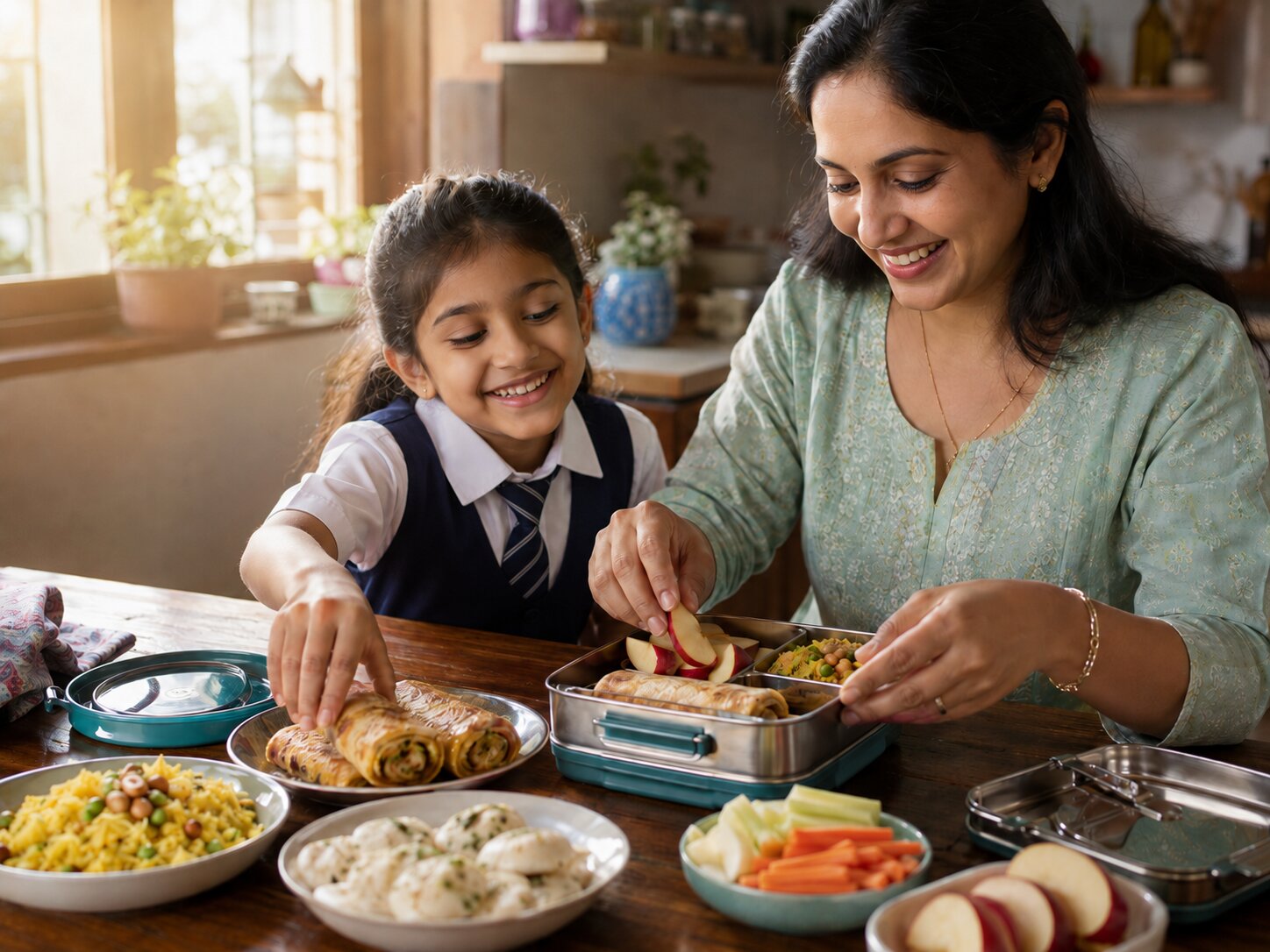
Some healthy lunch box options are vegetable poha, paneer paratha rolls, small idlis, and moong dal chilla. An easy combination formula is to pair a carbohydrate with a protein, add fruits and veggies, and make the food interesting and easy to eat. According to ICMR-NIN Dietary Guidelines for Indians, grains, legumes, vegetables, and fruits should be part of children's daily diet.
Cooking is not the most difficult thing to do in a school morning. The real challenge is to pack something nutritious that your child will actually eat. In this article, you will find 20 unique ideas for kids’ tiffins, which include well-known Indian dishes with protein, vegetables, and easy-to-pack formats. You’ll also find a 5-day plan along with some practical packing tips.
What Makes a Good Kids’ Tiffin?
A good tiffin need not resemble an elegant buffet menu.
All that it requires is being well-balanced, practical, and tempting enough to withstand the notorious and continuous “I don’t like it” periods.
Begin with some sources of complex carbohydrates that give them energy that lasts. Include some sources of protein that keep them full and focused. Add a little bit of colour by adding some fruits and vegetables. Finish off by increasing the kid appeal by cutting the food into interesting shapes, bite-sized portions, etc.
When it comes to what to limit in your children’s diet, things like chips, sugary juice, and refined-flour-only items are best left out of the tiffin as they are not rich in essential nutrients and leave your kids hungry by mid-morning.
20 Healthy Tiffin Ideas for Kids
Rolls & Wraps
1. Paneer Bhurji Roll
Take some paneer bhurji that is lightly spiced and add it to a roti. Also, you can add some grated vegetables. Roll it and cut it into two or three pieces.
Nutritional value: protein + carbohydrate
Packing Tip: You can wrap each piece separately with parchment paper.
2. Veggie & Cheese Wrap
Smear some hung curd or chutney on the roti. Then you can add some grated carrots, cucumbers, capsicums, and some cheese.
Nutrition tag: protein + carbohydrate
Packing Tip: You can use colourful vegetables and roll the roll in pinwheels.
3. Egg Roll
Make a simple egg omelette and put it inside a roti. If your kid likes vegetables, add some.
Nutritional value: protein + carbohydrate
Packing Tip: Cut it into spiral pieces or smaller pieces.
4. Aloo Paratha Shapes
Prepare your regular aloo paratha, but try to present it differently. You may cut it into triangles, strips or any shape you like using a food-safe cutter.
Nutrition tag: Carbohydrates + protein (optional) from curd
Packing Tip: Try adding a small packet of curd or mild chutney for dipping.
Rice & Poha
5. Vegetable Poha
Boil poha with peas, carrots and mild spices and add lemon at the last.
Nutrition tag: Carbohydrates + protein
Packing Tip: Add vegetables in a fun and attractive form rather than hiding all of them.
6. Lemon Rice
Sprinkle lemon and curry leaves into cooked rice. Do include peanuts only if your child’s school allows that and there is no fear of allergies.
Nutrition tag: Carbohydrates + healthy fats + protein
Packing Tip: Try to keep the taste subtle and also add fruits along with it.
7. Paneer & Vegetable Pulao
Make pulao with rice and small pieces of paneer, peas, carrots and other vegetables your kid likes.
Nutrition tag: Protein + carbohydrate
Packing Tip: Cut paneer into small pieces and make the vegetables colourful.
8. Curd Rice
Add freshly prepared curd and mild tempering to the cooked rice. It is particularly helpful when packing on hot days.
Nutrition tag: Carbohydrates + protein + calcium
Packing Tip: Include pomegranate seeds or grated carrot for colouring.
South Indian Bites
9. Mini Idlis + Chutney
Prepare mini idlis and carry mild coconut or mint chutney separately. Alternatively, you can serve them with a few spoons of sambar if your lunch box permits.
Nutritional information: Carbohydrate + protein
Packing Tip: Being mini-sized makes them easy for kids to handle.
10. Vegetable Uttapam
Prepare a small uttapam and sprinkle chopped onion, carrot, tomato, or capsicum on it. Avoid spicy seasoning.
Nutritional information: Carbohydrate + protein
Packing Tip: Prepare mini uttapams instead of making one big uttapam.
11. Dosa Rolls
Prepare a thin dosa and stuff it with paneer, mildly prepared vegetables, or mild potato stuffing and cut into bite-sized rolls.
Nutritional information: Carbohydrate + protein
Packing Tip: Instead of just “dosa,” dosa rolls are much more attractive to children.
Chillas & Pancakes
12. Moong Dal Chilla
Make a batter out of soaked moong dal and prepare thin chillas. Add grated carrot, spinach, or paneer if your kid likes them.
Nutritional information: Protein + carbohydrate
Packing Tip: Prepare mini chillas and provide a light yoghurt dip along with it.
13. Besan-Oats Chilla
Prepare the besan and oats mixture by adding some grated veggies and mild spices, and prepare small chillas.
Nutritional information: Protein + fibre + carbohydrates
Packing Tip: Cut into strips that are easy to handle.
14. Banana-Oats Mini Pancakes
Prepare the mixture by blending mashed bananas with oats. Make mini pancakes.
Nutritional information: Carbohydrates + fibre + protein
Packing Tip: Mini pancakes give a treat-like feeling rather than that of a tiffin.
Parathas & Theplas
15. Methi Thepla
Prepare soft methi theplas using whole wheat flour and finely chopped methi. Serve with curd.
Nutritional information: Protein + complex carbohydrates
Packing idea: Make rolls of the same or even cut them in strips.
16. Stuffed Paneer & Vegetable Paratha
Stuff whole wheat paratha with paneer and finely chopped vegetables. Make the masala mild.
Nutritional information: Protein + carbohydrate
Packing idea: Cut in small triangles and serve with yoghurt on the side.
17. Palak Paratha
Grind cooked palak in the dough to make the natural green parathas. Serve them with curd.
Nutrition label: Carbohydrate + protein + calcium
Packing idea: Cut into triangles for little green bites.
Bite-Size & Snacky
18. Sprout Chaat
Mix the steamed or properly prepared sprouts with cucumber, tomatoes, and a light seasoning. Maintain an appropriate texture based on the age of your kid.
Nutritional information: Protein + fibre
Packing idea: Allow your kid to select his or her preferred topping.
19. Vegetable Cutlets
Combine mashed vegetables with whole-wheat flour and mild spices. Shape into small cutlets and cook until lightly crispy.
Nutrition label: carbohydrates + protein
Packaging appeal: Shape them in stars, hearts, or circles to turn boring veggies into fun food items.
20. Dhokla + Fruit
Make a simple dhokla batter with besan, curd, and water, then steam until fluffy. Cut into bite-sized pieces and pack with a fruit of your choice.
Nutrition label: Carbohydrates + protein
Packaging appeal: Cut the dhokla into square or triangular portions.
The best strategy for following this list is to alternate in sets of the above three types of food items.
A 5-Day Tiffin Plan You Can Actually Follow.
Planning five school lunches simultaneously will significantly reduce the morning hustle and bustle. Below is an easy rotating method based on the tips described above.
| Day | Main | Side / Fruit | Nutrition highlight |
| Monday | Paneer bhurji roll | Apple slices | Protein + carbohydrate |
| Tuesday | Vegetable poha | Banana | Protein + carbohydrate |
| Wednesday | Mini idlis + mild chutney | Pomegranate | Protein + carbohydrate |
| Thursday | Moong dal chilla | Curd + fruit | Protein + carbohydrate |
| Friday | Stuffed paneer paratha | Orange | Protein + carbohydrate |
Follow rotation and repetition. You may tweak the recipes with your kid’s favourites, add different fruits, and reuse ingredients from one recipe to the next.
For instance, paneer used for Monday’s roll will be utilised in making paratha filling. Carrot may be added to poha, chilla, and uttapam. A single cooking session will help to solve several problems that may occur in the morning.
Packing Tips & Food Safety
An adequate tiffin will have no use if it spills or leaks during the journey to school and loses its appeal. Follow these easy but essential packing tips for your busy mornings:
- Add some fruit. A whole or easily eaten fruit like banana, apple, grape, or pomegranate will provide variety but won’t require you to prepare another meal.
- Make it colourful. Shredded carrot, beet, spinach, peas, or capsicum will add variety to your parathas, chillas, rice, and rolls.
- Avoid sogginess. Separate chutney, curd, and other wet sides into leak-proof boxes. Make sure very hot food is cooled down appropriately before packing to prevent excess moisture.
- Put food in the right box. A clean, watertight container is needed for non-perishable foods. Foods that are perishable, including curd, paneer, eggs, and cheese, require special consideration during hot weather.
- Keep Indian heat in mind. An insulated lunch box or lunch carrier should be used with the right cold source to carry perishable foods.
- Avoid nuts. Nut policies are common due to allergic issues at school. If the child goes to a nut-free school, don’t send peanuts and tree nuts. Only use alternatives, if allowed by the school.
Lastly, only send what the child can consume. It is better to send a small amount of balanced food than to fill up a tiffin box which will be brought back.
How to Get Picky Eaters to Finish the Box
It is not about making all veggies smiley faces!
Rather, it is about making healthy food seem more relatable so that kids give it a chance. Start with foods which kids like. Introduce small variations to those foods. For instance, if kids like parathas, give them palak paratha. Similarly, you could give them dosa rolls if they like dosa and veg pulao if they like rice.
Introducing variations to food is fun! Try to cut it in interesting ways or use dips. Kids will find it more appetising when the food seems less daunting.
Offer them some choices. Let them decide which two fruits they want to eat in the coming week or let them choose between two tiffins.
Practice exposure, not force. Refusal of food once by the child does not mean that he/she will always dislike the food. The American Academy of Pediatrics emphasizes that the child may require several exposures before accepting the new food. Offer a small amount of the new food along with their favourite food and try again later.
Also keep in mind: fussy eating is normal for children. The tiffin does not have to be perfect every day.
Rounding Out Nutrition: Where a Drink or Add-On Fits
Balanced tiffin, along with the rest of the day’s food intake, should continue to form the base of the child’s nutrition. A nutrition drink is a complement to a meal and not its substitute.
In case of very fussy children, children who eat small amounts of food or those with hectic mornings, parents could think of adding an appropriate children’s nutrition drink along with the diet. It is always better to use a suitable product for the age and nutritional requirements of the child.
For instance, Gritzo SuperMilk is a nutrition supplement range aimed at children tailored according to their age group, gender and activity level. Its SuperMilk range includes protein and other essential elements such as calcium, vitamin D3, zinc, etc.
If you are searching for more ways of introducing protein into your kid’s meals, take a look at the Gritzo high protein diet tips.
As always, the priority is food: diversity on the plate, regular meals, and sufficient opportunities to try new foods. An addition will complement the meal but not replace it.





 No Refined Sugar
 No Preservatives
 No Maltodextrin