Iron Deficiency Symptoms in Kids: Early Signs, Causes & Treatment

Key Takeaways
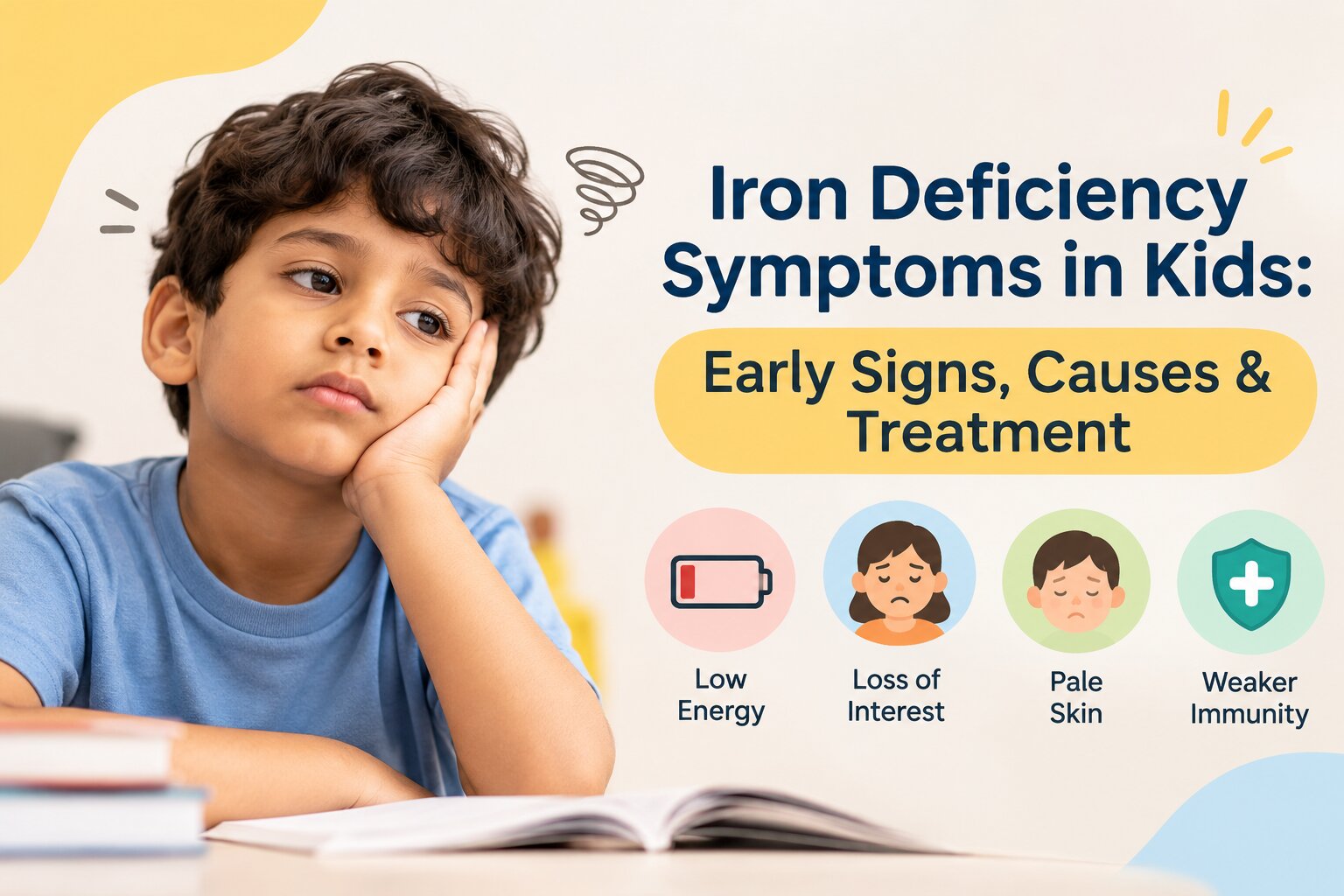
Early Warning Signs: Watch for unusual fatigue, pale skin, irritability, cold extremities, poor concentration, and pica (craving non-food items like dirt or ice).
- Primary Triggers: Deficiencies often stem from a lack of iron-rich solid foods, rapid growth periods, or drinking excessive cow's milk, which displaces nutrient-dense meals.
- Proper Management: Never self-prescribe supplements; a pediatrician must diagnose the condition via blood tests before recommending safe dietary adjustments or medication.
What Are the Early Signs of Iron Deficiency in Kids?
Common symptoms of iron deficiency in children include unusual tiredness, pale skin, irritability, cold hands and feet, poor concentration, thin nails, poor appetite, and pica (cravings for non-food substances such as ice, chalk, or dirt). A complete blood count, through early screening, can help in preventing long-term cognitive and developmental delays.
Understanding Iron Deficiency vs. Iron Deficiency Anaemia
Iron is a vital mineral for making haemoglobin in children. Haemoglobin is a protein contained in red blood cells, which help transport oxygen from the lungs to the other parts of the body.
Children growing up require oxygen for brain activities, muscle functioning, and growth. Iron is also required for many processes that aid learning and development.
Low levels of iron in the body can lead to iron deficiency or iron deficiency anaemia. With iron deficiency, iron reserves within the body are exhausted. Ferritin stores, which are an iron reserve protein in the body, may be low in a child despite having normal haemoglobin levels. Whereas, with iron deficiency anaemia or childhood anaemia, insufficient amounts of iron result in inadequate haemoglobin production. haemoglobin drops in levels, limiting oxygen transport capability of blood.
Recognisable Iron Deficiency Symptoms in Children
Iron deficiency symptoms can be subtle. They can also seem like normal fatigue or behavioral differences associated with growing up.
1. Physical Symptoms
Skin and Mucous Pallor
Pallor can be one of the more recognisable symptoms of iron deficiency anaemia. You will notice paleness around the lips, face, nails, or even pale inner eyelids anaemia in your child.
Fatigue and Lethargy
The low levels of iron in the blood make it unable to carry enough oxygen to the body tissues, which could be a cause of tiredness in the child.
Cold Extremities
A common symptom in children with anaemia is cold hands and feet. The symptom occurs together with others, although the coldness of the limbs is not a definite sign of low iron.
2. Behavioural and Cognitive Indicators
Irritability
Children who lack iron may show increased irritability, restlessness, or fussiness. Such behaviours are common in children and do not necessarily imply iron deficiency on their own. However, they become more significant when they are coupled with fatigue or poor appetite.
Learning and Focus Impairments
Iron plays an essential role in healthy brain development. Low iron signs in toddlers include an inability to focus, concentrate on studies, or pay attention during any activity. Others may appear sluggish and need more time to finish tasks.
3. Atypical or Severe Signs
Pica
Pica in kids is a disorder that consists of recurrent cravings for eating non-food materials such as ice, chalk, clay, or soil. Children eating such materials may suffer from health risks including choking and infections from toxins or parasites. Pica usually occurs in children suffering from iron deficiencies, but it is best to consult a paediatrician regarding this.
Glossitis
Glossitis refers to inflammation of the tongue. Sometimes, the tongue might look very smooth, swollen, or painful. The child might have complaints of pain while eating or may express refusal of certain food items.
Brittle nails and restless legs
Chronic iron deficiency can lead to brittle nails. Iron deficiency can also cause restless legs syndrome in some children, where they experience pain or an urge to move their legs.
All these symptoms are not sufficient for a diagnosis of iron deficiency. A proper medical evaluation will help to decide whether it is iron deficiency or any other condition that causes these symptoms.
Primary Causes of Low Iron in Kids
Knowing about the causes of low iron in kids will allow parents to make changes in the child’s diet and lifestyle.
1. Dietary Inadequacy
The intake of iron-rich foods is necessary for children as they start to shift from being fed on milk to eating solids. A restricted diet will not provide sufficient iron, especially if the child takes little amounts of pulses, beans, fortified cereals, or any iron-containing foods. Picky eating habits may also be a factor if the child rejects many food groups.
2. Drinking Too Much Cow’s Milk
Milk does not contain much iron. Due to this (cow milk anaemia toddler), a child usually feels full after consuming it and consequently avoids eating iron-containing solid foods. In addition, in some children, cow’s milk consumption can also cause bleeding in the intestine.
From a practical point of view, parents can try to limit milk consumption to 500 mL per day among toddlers if nothing else is advised by their clinician. For example, according to recommendations from the American Academy of Pediatrics, no more than 24 ounces, which equals 710 mL of milk per day, should be consumed by children above 12 months old.
3. Rapid Growth and Increased Iron Needs
There are periods when babies, young children, and teenagers undergo rapid growth. In these stages, the body requires iron to cope with increased blood volume and growth-related functions. The body requirements of adolescent females require more iron due to their monthly periods, which lead to blood loss.
4. Problems With Iron Absorption or Blood Loss
Some diseases make the absorption of iron more difficult or cause continuous loss of blood in the body. Some of these diseases include celiac disease, gut inflammation, and gastrointestinal bleeding. Parasitic infections may also be responsible for anaemia in some cases.
Daily Recommended Iron Requirements for Children
Children need different amounts of iron at different ages. The table below compares commonly used AAP (Global) dietary guidelines with India’s ICMR-NIN (Indian Context) 2020 recommendations.
| Age Group | ICMR-NIN RDA (India) | AAP / Global RDA | Key Nutritional Milestones |
| 7–12 Months | ~3–11 mg/day | 11 mg/day | Complementary food introduction |
| 1–3 Years | 8 mg/day | 7 mg/day | Milk intake limited to < 500 mL/day |
| 4–6 / 4–8 Years | 11 mg/day | 10 mg/day | Active physical & school growth phase |
| 7–9 / 9–13 Years | 15 mg/day | 8 mg/day | Higher demands for muscle mass expansion |
How Do Doctors Diagnose Iron Deficiency in Children?
Iron deficiency cannot be diagnosed using only symptoms. The paediatrician takes into account the age of the child, his medical history, nutrition, growth, and symptoms when recommending the right blood test.
1. Complete Blood Count (CBC)
CBC test for child anaemia is a test that checks many different factors in the blood, such as haemoglobin and red blood cell properties.
Doctors may look at:
- Haemoglobin: Used to diagnose anaemia.
- Mean corpuscular volume (MCV): It checks the size of red blood cells. In case of iron deficiency anaemia, there is usually a presence of small red blood cells.
2. Serum Ferritin Test
Ferritin is a marker for the storage of iron in the body. A lower ferritin reading can be used to detect depletion of iron stores before anaemia occurs.
However, an increase in ferritin can be seen during infections and inflammation. The doctor can use the value together for a pediatric ferritin test with other factors, such as the child’s symptoms, other blood results, and inflammatory markers,s as necessary.
3. When Should Children Be Screened?
The American Academy of Pediatrics’ 2026 clinical guidance recommends screening infants and young children according to their feeding patterns and risk factors.
For infants primarily receiving breast milk, screening is recommended at 9–12 months. For infants primarily receiving iron-fortified formula, screening is recommended at 15–18 months, after the transition to other milk feeds. Children with ongoing risk factors may need repeat assessment.
These recommendations may differ from local screening practices. In India, parents should discuss suitable screening timing with their paediatrician, particularly if their child was born prematurely, has a restricted diet, drinks excessive amounts of milk, or shows symptoms.
Prevention and Treatment Strategies
The right approach depends on whether a child needs dietary changes, medical treatment, or both. Food can help prevent iron deficiency and support recovery, but food alone may not be enough to correct established iron deficiency anaemia.
Dietary Management (Heme vs. Non-Heme Iron)
There are two main forms of iron present in iron-rich foods for kids: haem iron and non-haem iron.
Haem iron is found in meats, poultry, and fish. Haem iron is better absorbed by the body than non-haem iron. It has a high bioavailability of about 15–25%, which means that a large and rapid fraction of a consumed substance successfully enters your bloodstream and reaches its intended site of action in the body.
Non-haem iron is found in plants and other sources that are artificially fortified with iron, such as lentils, beans, chickpeas, tofu, spinach, ragi, and artificially iron-fortified breakfast cereals. Eggs also contain iron, which is non-haem in nature. Non-haem iron has a bioavailability of about 2–8%, which means that only a small fraction of a consumed substance successfully enters your bloodstream and reaches its intended site of action in the body.
Absorption Enhancers
To understand how to increase iron in toddlers, you need to know what helps it get absorbed in the body. Vitamin C facilitates the absorption of non-haem iron from plants into the body. One easy way to increase absorption is to have a food that is rich in vitamin C accompany the food that is rich in iron.
Try combinations such as:
- Lentils with lemon juice.
- Chickpeas with tomatoes.
- Beans with capsicum.
- Iron-fortified cereal with vitamin C-rich fruit.
- Ragi dishes alongside amla, orange, or guava.
Absorption Inhibitors
Large amounts of milk may replace iron-containing foods in the diet of toddlers. Iron absorption can be hindered temporarily by calcium if the two minerals are taken together. However, children still require calcium for bone health, and thus there is no need to remove dairy products from their diet completely. Hence, only avoid giving tea, calcium, or whole milk directly alongside iron-rich meals.
Medical Iron Supplementation
If there is certain proof of iron deficiency or iron deficiency anaemia in your child through blood tests, the paediatrician will recommend paediatric iron drops, syrup, or other preparations as appropriate.
The dose of treatment depends on the age, weight, degree of deficiency, and the elemental content of the medicine. Traditionally, doses of 3–6 mg/kg/day of elemental iron are prescribed.
Fortified products that provide nutritional support to children may be beneficial to ensure proper nutrition on a daily basis if appropriate for the age of the child and their diet. However, these products cannot replace the medical treatment of the condition if the child is suffering from iron deficiency anaemia. Consult your paediatrician before starting a supplement.
When to Consult a Paediatrician
Get your child medically examined if he/she exhibits signs such as extreme tiredness, pale appearance, lack of appetite, difficulty focusing, inadequate weight gain, and strange food cravings like pica. Consult your pediatrician immediately if your child is extremely inactive, struggling to breathe, breathing fast while at rest, passing out, or appears extremely ill.
Iron supplements should never be given to a child in large amounts without consulting a doctor. An iron overdose is very dangerous and may result in poisoning.
Conclusion
Iron deficiency can hinder a child’s energy levels, attention span, and development; however, signs of iron deficiency are not always apparent. Being excessively tired, pale skin, irritability, and pica should be discussed with a medical professional, but are not necessarily indicators of iron deficiency.
Provide a varied and balanced diet that contains iron-rich foods; combine non-heme iron with vitamin C and do not allow large amounts of milk to substitute for balanced meals. Fortified food products can also provide daily iron intake if needed.
If you suspect an iron deficiency, discuss further steps with your pediatrician and appropriate treatment. You can check out the balanced diet chart for toddlers and vitamin C sources for children for further information on your kid’s nutrition.




 No Refined Sugar
 No Preservatives
 No Maltodextrin